
 Português
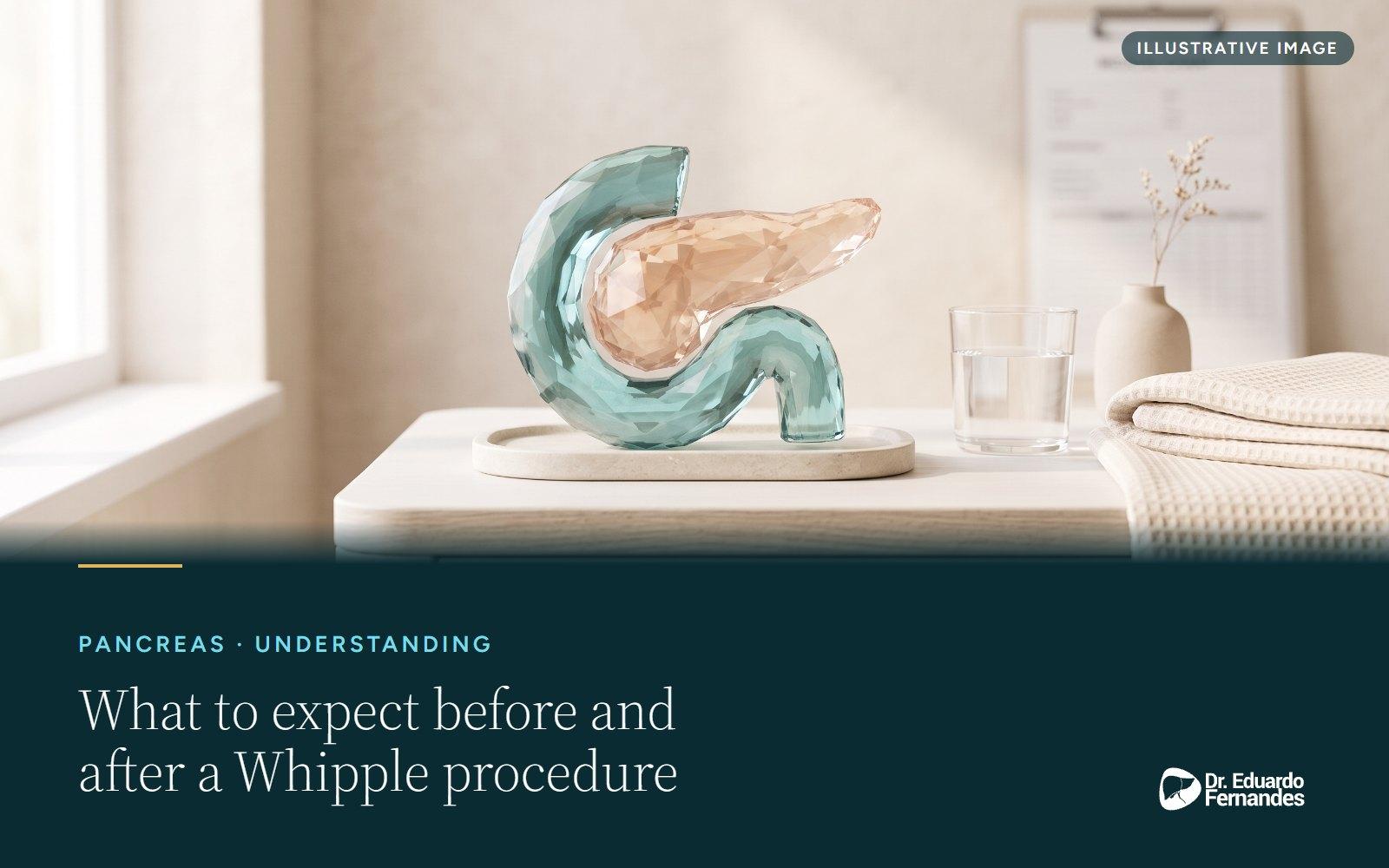
The Whipple procedure, or pancreaticoduodenectomy, is the main surgery for tumors in the head of the pancreas, the ampulla of Vater, the duodenum, and the lower bile duct. Knowing what happens at each stage helps the patient and family prepare.
Before the surgery
The evaluation includes imaging tests such as CT and MRI, blood tests, and tumor markers. If the tumor blocks the bile passage and the skin turns yellow, a bile duct stent may be placed before the operation.
Nutritional assessment is also part of the evaluation, and in some cases, chemotherapy may be given before surgery. The indication is discussed between surgery and oncology.
During the surgery
The head of the pancreas, the duodenum, the gallbladder, the lower bile duct, and, in many cases, the lower part of the stomach are removed. Afterward, a loop of the intestine is connected to the pancreas, bile duct, and stomach, reestablishing the path of pancreatic juice, bile, and food.
It is a long surgery that lasts several hours. It is usually performed open, but in selected cases, it can be done minimally invasively.
After the surgery
Hospitalization lasts several days to a few weeks, with a gradual return to eating. A well-known complication is a pancreatic fistula, a leakage in the connection between the pancreas and the intestine, which is closely monitored by the team and, in most cases, resolves without further surgery.
After discharge, digestive enzymes may need to be taken with meals, and blood sugar levels should be monitored. Follow-up continues with surgery and oncology.
See the 3D animation of the Whipple procedure, passo a passo.
Dr. Eduardo de Souza Martins Fernandes · CRM-RJ 52.00731242