
 Português
Surgery to remove the head of the pancreas, the duodenum, and part of the bile duct.
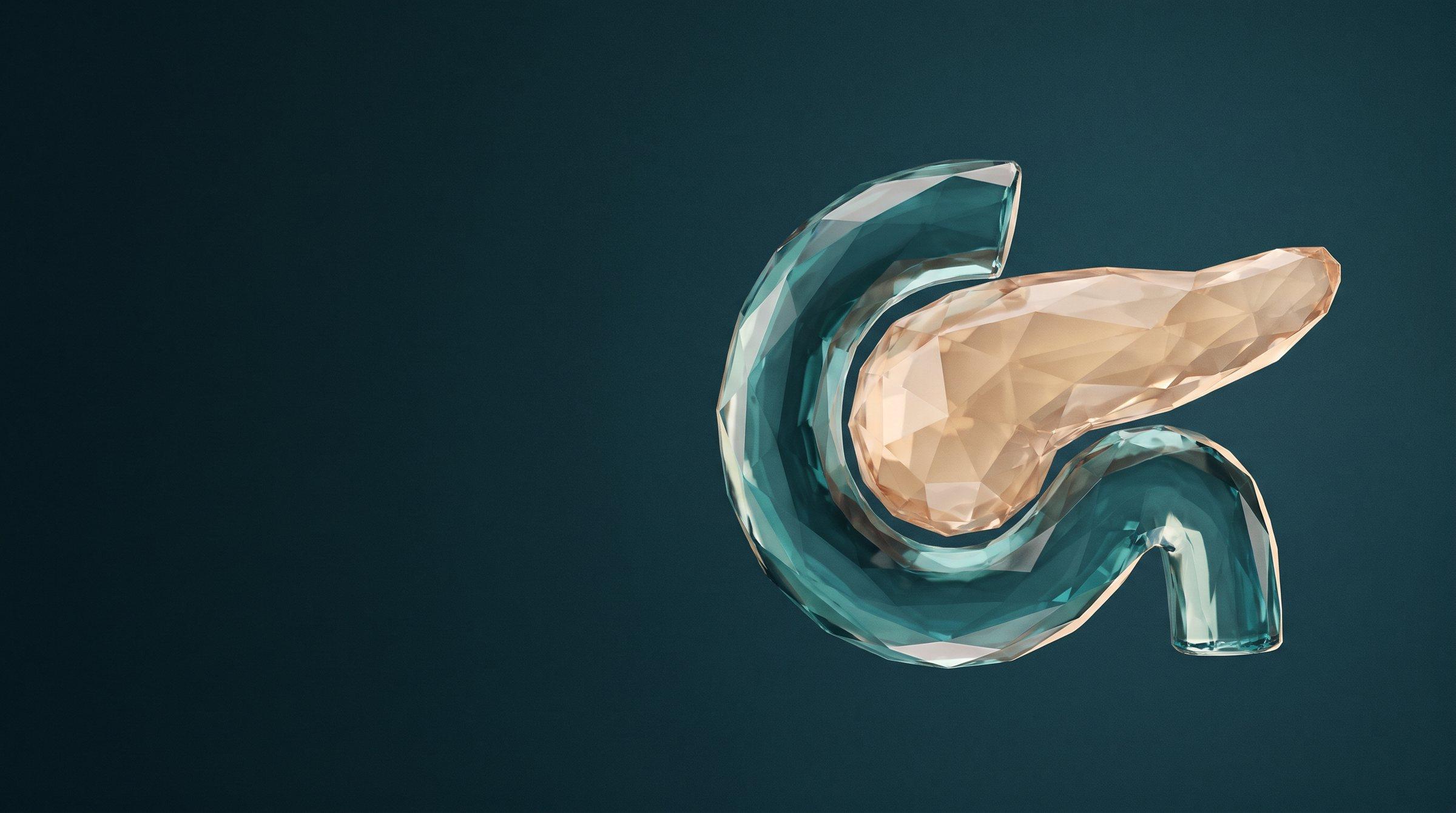
The Whipple procedure is performed to remove pancreatic cancer. It is also used to treat pre-malignant tumors of the pancreatic head or related structures (Vater's ampulla, duodenum, or bile duct). Less commonly, it is used to treat pancreatic or duodenal trauma or chronic pancreatitis.
Procedure
The Whipple procedure (pancreaticoduodenectomy) involves removing the head of the pancreas, the duodenum, part of the biliary tract, the gallbladder, and may include part of the stomach (pylorus) and jejunum.
Whipple procedure with arterial and venous resection.
Whipple procedure
PANCREATICODUODENECTOMY
Whipple surgery is performed to remove pancreatic cancer. It may also be used to treat pre-malignant tumors of the pancreatic head or related structures (Vater's ampulla, duodenum, or bile duct).
The Whipple procedure (pancreaticoduodenectomy) involves removing the head of the pancreas, the duodenum, part of the biliary tract, the gallbladder, and may include part of the stomach (pylorus) and jejunum.
After removal, a loop of the intestine (jejunum) is brought to the pancreas, bile duct, and stomach. Three anastomoses recreate the path of pancreatic juice, bile, and food.
Step-by-step Whipple procedure
Read the video text
- 1. Where the pancreas is located
The pancreas lies behind the stomach. Its head sits in the curve of the duodenum, the first part of the small intestine. The bile duct carries bile from the liver and gallbladder to the duodenum.
- 2. The tumor in the head of the pancreas
The Whipple procedure is most often used for pancreatic head cancer or tumors of the ampulla of Vater, duodenum, or bile duct. Because these structures sit so close together, the surgeon removes them together.
- 3. What the surgeon removes
The surgeon removes the head of the pancreas, the duodenum, the gallbladder, the lower bile duct, and the first part of the jejunum. In many cases, the lower stomach, including the antrum and pylorus, is also removed.
- 4. Reconstruction
The surgeon brings up a loop of the jejunum and connects it to the pancreas, bile duct, and stomach. These three connections allow pancreatic juices, bile, and food to reach the small intestine.
3D DIDACTIC ANIMATION, NO REAL SURGERY IMAGES · DETAILS OF EACH SURGERY DEPEND ON THE CASE
Whipple surgery with vein resection and reconstruction
Some tumors in the head of the pancreas grow toward the superior mesenteric vein and portal vein, which carry blood from the intestines to the liver. For many years, contact with these veins was enough to rule out surgery.
For some patients, a Whipple procedure can include removing and reconstructing the affected segment of vein. The surgical and oncology teams consider how far the tumor has grown and, often, how it has responded to chemotherapy.
The team also uses these vascular reconstruction techniques in liver transplantation. In 2026, it published a comparison of the mesenteric and conventional approaches to pancreaticoduodenectomy (Gland Surgery, PMID 42445090).
Read the video text
- 1. The tumor and the vein
Some pancreatic tumors can attach or involve the mesenteric vein and the portal vein, which carries blood from the intestines to the liver.
- 2. What the surgeon removes
In selected cases, the tumor is removed along with the segment of the vein where it is attached.
- 3. Removing the diseased organ
Removing the affected segment leaves two open ends of the vein.
- 4. Reconstructing the vein
These ends are then reconnected either directly or with a graft, and blood flow resumes normally.
3D DIDACTIC ANIMATION, NO REAL SURGERY IMAGES · INDICATION DEPENDS ON EACH CASE
Cases and explanations
Each video includes the text of what is said below it. The surgical cases have real images and only start when you click.
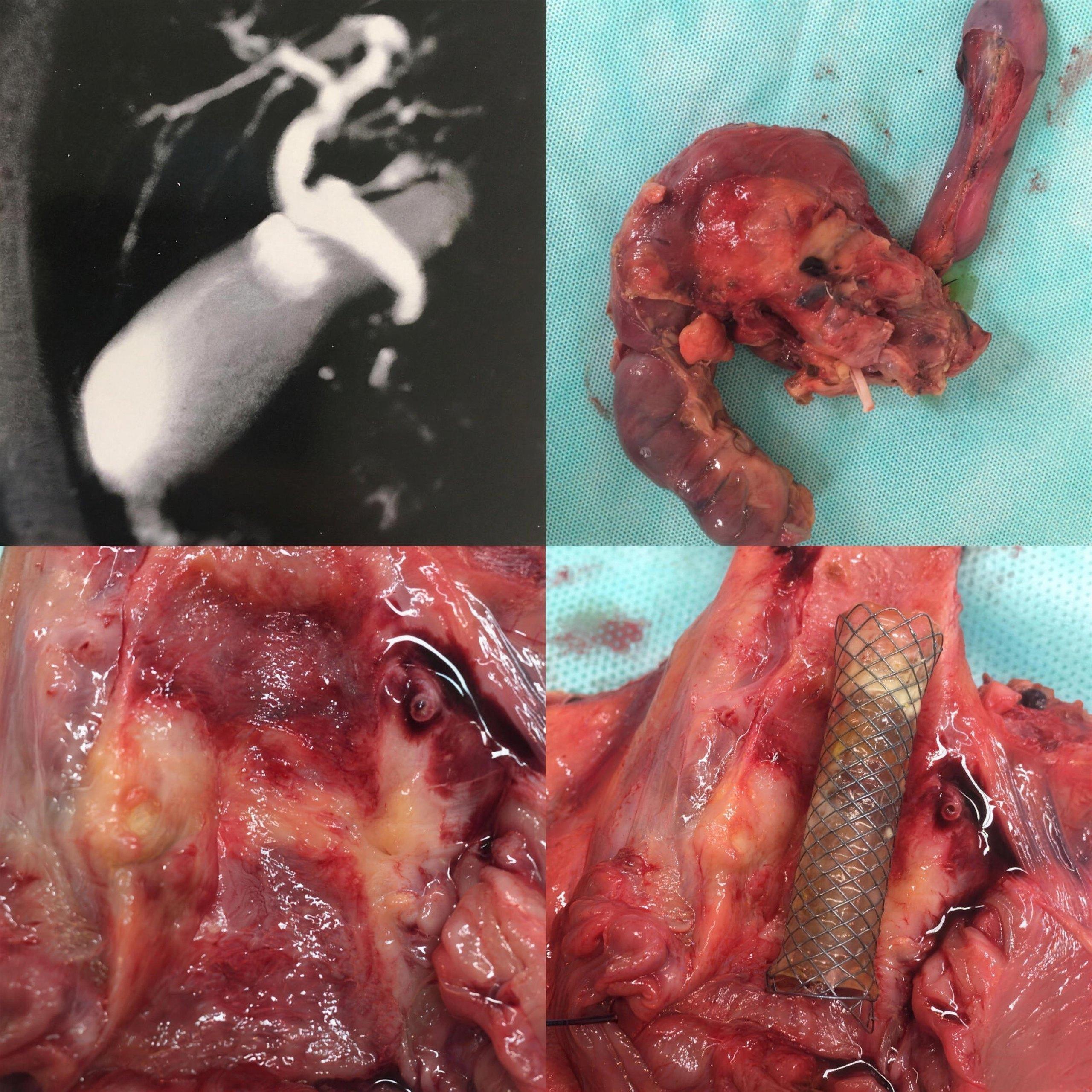
This is a male patient who underwent a radical pancreaticoduodenectomy via the Nakao approach, or mesenteric approach. This is the final appearance.
This is the portal vein, or the superior mesenteric vein near its confluence with the splenic vein. We used a falciform ligament graft to reconstruct the lateral wall of the portal vein. This is the renal vein, and this is the inferior vena cava.
This is the total excision of the mesopancreas. Here you can see the superior mesenteric artery, the celiac trunk, and the entire mesopancreas area, the so-called triangle, as described by the Heidelberg group. This is the pancreas. This is the splenic vein, the splenic artery, the hepatic artery, and the superior mesenteric artery exposed.
This is the mesenteric approach: you can see the excision of the mesocolon and, above, the resection of part of the pancreatic body. Now we move to the reconstruction.
This is a 60-year-old female patient with pancreatic cancer. She underwent neoadjuvant treatment with FOLFIRINOX and today underwent the radical operation. This is the final appearance.
The tumor occupied almost the entire pancreatic body and extended to the head, so we performed a total pancreatectomy via the Nakao approach. Here you see the mesocolon, with the resection of station 15 lymph nodes. Finally, we reimplanted the inferior mesenteric vein into the superior mesenteric vein.
This is the superior mesenteric artery, fully exposed, the common hepatic artery, and the left gastric artery. We also resected the hepatic artery: this is the end-to-end anastomosis. The tumor was here, invading the pancreas. This is the origin of the splenic artery.
This is the left adrenal vein. We also performed the RAMPS procedure, and here you see the kidney: resection of the left adrenal gland and portal vein, also with end-to-end anastomosis.
From the operating room
Dr. Eduardo Fernandes
Liver, pancreatic, biliary, and transplant surgeon. Professor of surgery at UFRJ, with a fellowship in liver and intestinal transplantation at the University of Nebraska, and experience in centers from the United States, Asia, and Europe.
Contact the care team
The office is in Gávea, Rio de Janeiro. Patients elsewhere in Brazil or abroad can send their medical records for an initial review.
RUA MARQUÊS DE SÃO VICENTE, 25, 5TH FLOOR · GÁVEA · RIO DE JANEIRO