 Português
Bile duct cancers, including tumors where the right and left hepatic ducts meet.
Bile duct cancers or cholangiocarcinomas are rare tumors that arise from bile duct cells and are divided, according to their location, into extrahepatic (outside the liver) and intrahepatic (inside the liver) bile duct cancers, gallbladder cancer, and Vater's ampulla.
Extrahepatic bile duct cancers include tumors that arise in the common hepatic duct, junction of the hepatic ducts, or common bile duct (or distal bile duct cancers) and perihilar (or Klatskin tumor).
When bile duct cancer causes symptoms, it is usually because the bile duct is blocked. The main signs and symptoms of bile duct cancer are: jaundice, itching, light-colored stools, dark urine, abdominal pain, loss of appetite, fever, nausea, and vomiting.
The main tests performed for the diagnosis or staging of bile duct cancer are: ultrasound, endoscopic or laparoscopic cholangiography, computed tomography, magnetic resonance imaging, cholangiography (by MRI, endoscopic, or transhepatic), positron emission tomography, angiography, and laparoscopy.
Hilar cholangiocarcinoma or Klatskin tumor
The Klatskin tumor forms at the junction of the ducts that carry bile from the right and left sides of the liver. This region also contains the portal vein and branches of the hepatic artery. Imaging studies help identify which structures are involved and how much liver can be preserved.
In a case reported by Dr. Eduardo, the team prepared the part of the liver that would be preserved with biliary drainage and embolization of branches of the portal vein. After re-evaluating liver function, they removed the affected region and reconstructed the bile duct.
Procedure
Treatment is based on staging. When the disease is considered localized and resectable, the preferred treatment is surgery, as it is the only curative option. Post-operative complementation should be offered to some patients after a multidisciplinary team evaluation and, depending on the case, may include: chemotherapy, concurrent chemoradiotherapy, reoperative surgery in cases of gross residual disease, or observation. When considered unresectable (some stage III cases), drainage of the bile ducts (endoscopic with stent placement, percutaneous, or surgical) followed by complementary treatment may be discussed, which can be a research protocol (when available), concurrent chemoradiotherapy, isolated chemotherapy, or exclusive clinical support. In metastatic disease, treatment is palliative, and treatment options are limited to chemotherapy or exclusive clinical support.
Step-by-step guide to bile duct tumor surgery
Read the video text
- 1. The bile ducts
Bile is produced in the liver and flows through channels, the bile ducts, to the intestines. The gallbladder stores the bile on its way.
- 2. The tumor
The cholangiocarcinoma arises in these channels. When it is at the point where the channels join, it blocks the flow of bile.
- 3. What the surgeon removes
We remove the portion of the channels with the tumor, the bile duct up to the pancreas, and the gallbladder. In many cases, a part of the liver is also removed.
- 4. Reconstruction
A piece of the intestine is brought to the liver and connected to the remaining channels, so the bile can flow back to the intestines.
3D DIDACTIC ANIMATION, NO REAL SURGERY IMAGES · DETAILS OF EACH SURGERY DEPEND ON THE CASE

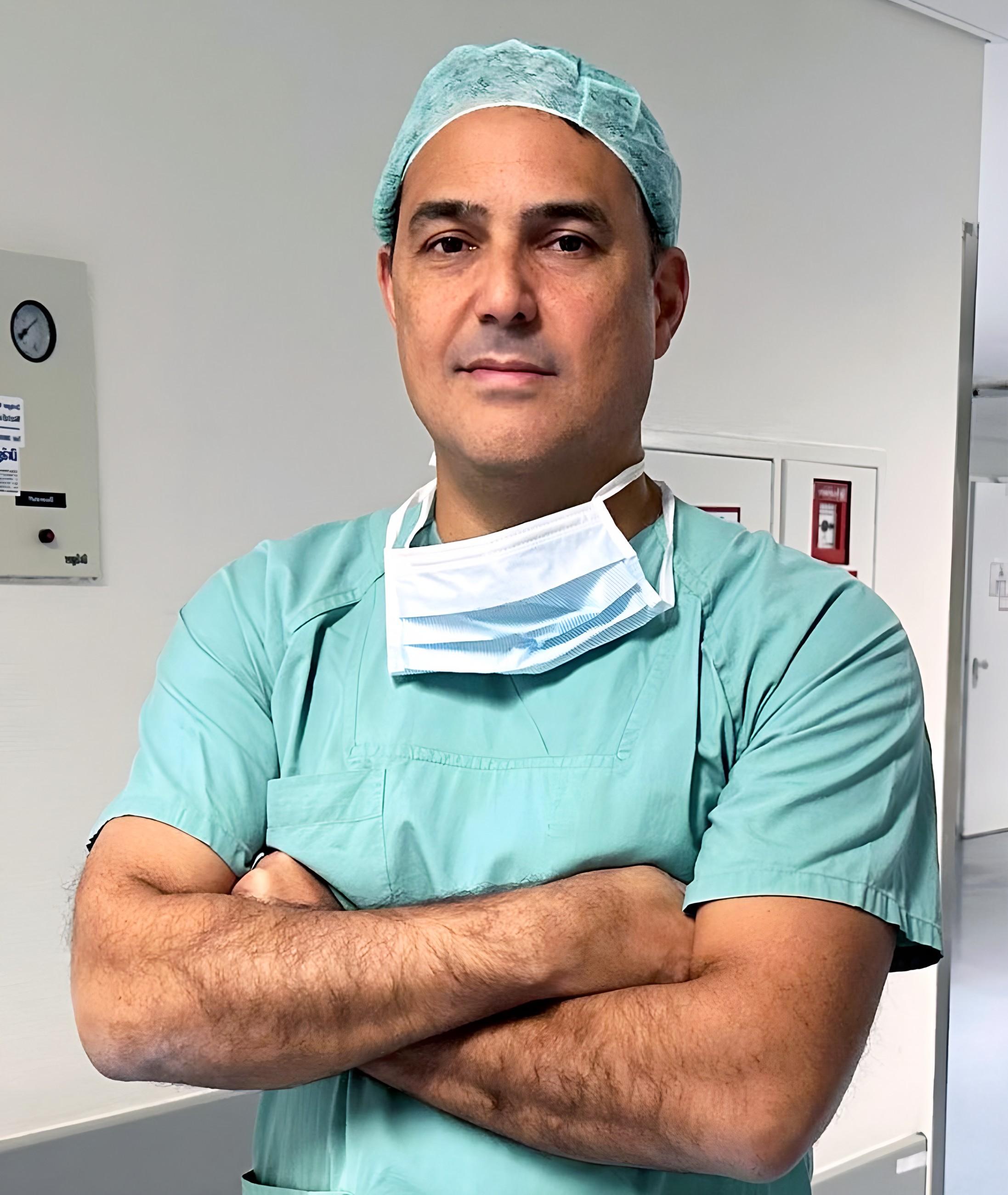
Dr. Eduardo Fernandes
Liver, pancreatic, biliary, and transplant surgeon. Professor of surgery at UFRJ, with a fellowship in liver and intestinal transplantation at the University of Nebraska, and experience in centers from the United States, Asia, and Europe.



Contact the care team
The office is in Gávea, Rio de Janeiro. Patients elsewhere in Brazil or abroad can send their medical records for an initial review.
RUA MARQUÊS DE SÃO VICENTE, 25, 5TH FLOOR · GÁVEA · RIO DE JANEIRO